Powerful and mighty with majestic beauty, wild cats are one of nature's
most awe inspiring creations. There are 36 species of wild cats, all deadly, highly
efficient predators. The world of exotic cats consists of 28 smaller
species of wild cats and 7 Big Cats, the Leopard, Clouded Leopard, Snow
Leopard, Tiger, Lion, Cheetah, and Jaguar.Spanning many continents, with the
exception of Antarctica and Australia, these lithesome
bundles of muscles are found living in the Artic snow, the mountains, and
grasslands of temperate zones, and in the steaming rain forests and swamps of
the tropics. Because of the actions of humans and the lack of conservation, all
of the Big
Cats are now on the
endangered species list.
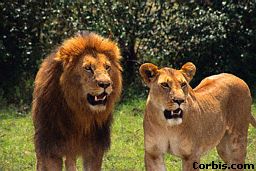
Male and Female Lions
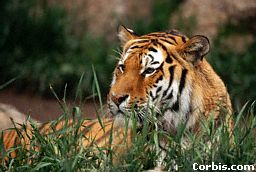
Siberian Tiger
Although most wild cats look big, there are
distinguishing features which separate the 7 Big Cats from the others.
The main characteristic is that adult Big Cats, roar and do not have the ability to
purr, with the exception of the Snow Leopard and Cheetah. This is caused by
the structure of the hyoid bone which connects the tongue to the roof of the
mouth. In all big cats, a portion of the hyoid bone consists of flexible
cartilage and the vocal folds are thick and padded. In the other species, the bone is
hard and the vocal folds are sharp. Big Cats have eyes that appear slanted
under a bright light, while the eyes off the smaller species appear round.
Another difference is that Big Cats usually eat while lying down and
small cats eat while standing up.
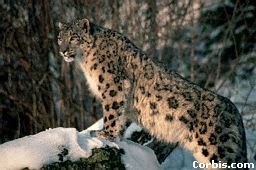
Snow Leopard
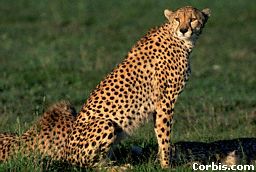
Cheetah
Roaming within their own, well defined territory, these grand animals are
solitary and usually
travel alone, except for a mother with cubs, and lions which travel in groups
called prides. Wild cats clearly mark their territory by simply walking
or leaving scented and visual scratching on the trunks of trees. Wild cats
have sweat glands in their paws, chin, lips, forehead and tails. As they
scratch or rub their heads and bodies against a tree, a scent is deposited.
This scent is detected by other cats, alerting them that
the area has already been claimed. All wild cats will fight to protect their
territory and source of food.
All wild cats are carnivores. Their strong jaws
have the ability to inflict a crush of death on a smaller
animal with a single bite. These meat eaters have sharp,sword like teeth
to rip and tear flesh from their prey. Wild cats have up to 5 inch long, razor
sharp, retractable claws which are thick and hooked. The purpose of such
lethal claws is for slashing, cutting, grasping prey and climbing trees.
When their claws are retracted, they are covered with a sheath of skin which
protects them from wearing down and keeps them sharp. This sheath also allows cats
to run silently without alarming their prey.

Lion Roaring
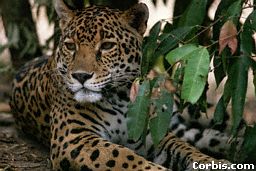
Jaguar
Having acute night vision, most wild cats are nocturnal hunters but also hunt to a lesser extent
during the day. They rarely use their sense of smell to hunt and rely on sight
and sound to detect prey. The Big Cats feed on large animals with
hooves such as zebra, gazelles, giraffes, cattle, warthogs and horses. Since
their prey is large, they only need to hunt once or a few times a week. The
smaller species of wild cats feed on rabbits, hare, small rodents, opossum, monkeys, birds
and other small animals. They must catch and eat several animals a day, competing
with other predators such as weasels, hawks,
owls and snakes, for food.
Given a specific set of circumstances,
lions and tigers can become man eaters, hunting, stalking and attacking
humans as prey. In the majority of cases hunger, due to loss of habitat, is
the driving force behind the transformation. In forests of the subcontinent of
India, where tigers have been notorious killers for hundreds of years,
officials have devised several methods of defense. Since tigers stalk and
attack from behind, people who work in the forests wear masks on the back of
their head. Pigs are released for food in areas where tigers reside near
villages. Dummies dressed as fisherman, woodsmen and honey collectors are
covered with an electrical wire. When the tiger attacks the dummy, it receives
a mild electric shock, in an effort to train them not to attack humans. The
traditional method of shooting off fireworks is also utilized.