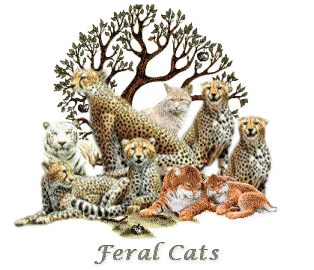

A feral cat is the
descendant of a stray, domestic housecat which was once somebody's pet.
Unwanted cats and litters of kittens are abandoned by owners, They then
become stray cats, giving birth to kittens
in the wild. These kittens receive no human companionship, so they
never become socialized. A feral cat will use its claws and teeth to
defend itself or territory in the same manner that all wild cats do. They become fierce and vicious wild cats, distrusting and fearing humans.
Although they look exactly like a common housecat, they will bite and
scratch if they are cornered or touched. If a feral kitten is under
8 weeks of age, it can usually be tamed as a pet if an individual has the time
and patience to provide the needed attention
and love.

There are between 60-100 million feral cats in the United
States alone. As these cats reproduce the population increases and multiplies
rapidly. An adult female has an average of 2 litters of 2-8 kittens a year.
Feral cats live in colonies and can be found congregating in parks, shopping
centers,
vacant lots, barn, college campuses, hotels and vacation resorts, where ever they can find a source of food. Dumpsters
behind food markets and restaurants are one of the main places
where feral cats congregate. Rancid garbage from trash cans, hunted prey
and whatever food they can receive from humans are their only sources of food.
Because of sickness from eating trash, diseases from being unvaccinated,
injuries from fighting and car accidents, the average lifespan of a feral cat
is only 2 or 3 years.
Trap- Neuter -Release and Other Alternatives
Sometimes animal shelters will try to place 2 spayed female feral cats on
farms where they can act as barn cats which help to keep down the rodent
population. However, most control facilities in the USA are killing nearly 6 million domestic cats each
year.The
American Veterinary Association and both the Cornell and Tufts University veterinary schools have accepted a
different, more humane system of feral cat management. Pioneered in the early
1970's in both England and Denmark, colonies of feral cats are being managed
through a concept called Trap-Neuter-Release. The TNR system is now being
practiced by caring individuals who assume complete
responsibility for a feral cat colony. The theory is that a colony of feral cats will
be eliminated naturally over the course of time because further breeding
will be halted.
Feral cats are
trapped, spayed, neutered and vaccinated against rabies , then released back into the colony.During
the surgical procedures, one of the cat's ears is slightly cropped so it can be distinguished from unvaccinated cats and those that have
not yet been spayed or neutered. The individual managing the colony traps the wild cats, pays for all medical
fees, provides
a structure for shelter and feeds the cats. This eliminates more unwanted feral
cats from being born, cat howling, cat spraying and keeps feral cats from
congregating in unwanted location. TNR also helps
prevent the problems associated with cats feeding from trash cans. Since a
significant reduction in the local wildlife population can occur in areas
containing large feral cat colonies, TNR helps reduce the hunting of prey,
helping to preserve species that are vanishing.
Is there any chance of taming an adult feral cat to the extent that it can
become a pet? No, not really. These cats were born in the wild and to them, it's
their natural habitat. For the most part, even though their lives are difficult,
they are the most content living in the colony environment that they were born
in. Stray cats that have not yet become feral can be re-tamed because human
companionship was once a part of their lives. Quite too often, strays have been
abused by their former owners who abandoned them. They will be naturally
untrusting of humans, but with time and patience they can be socialized enough
for them to be kept as pets once again. How can you tell the difference
between a stray and a feral cat? Feral cats are silent, and looked rather well
groomed because they have adapted to outdoor living conditions.They are usually
only seen between dusk and dawn and will run away at the site of a human. A
feral cat will not eat food until you walk away from it. A stray will
look messy and ungroomed because it has not adapted to street life. It will
generally walk up to you when you put food down for it to eat and it will purr,
meow or cry. Stray cats can be seen anytime of the day.
For information on implementing a TNR program of your own, visit the
links below.
Alley Cat Alley
Pets 911
Building Feral Cat Shelters.


Photos Courtesy of I Love Cats
Graphics by the Cottage Pet Shop
Page Design and Contents Copyright, Cockatiel Cottage,2002
|